
Is Fall the Right Time to Prune Your Trees? What South Okanagan Homeowners Should Know
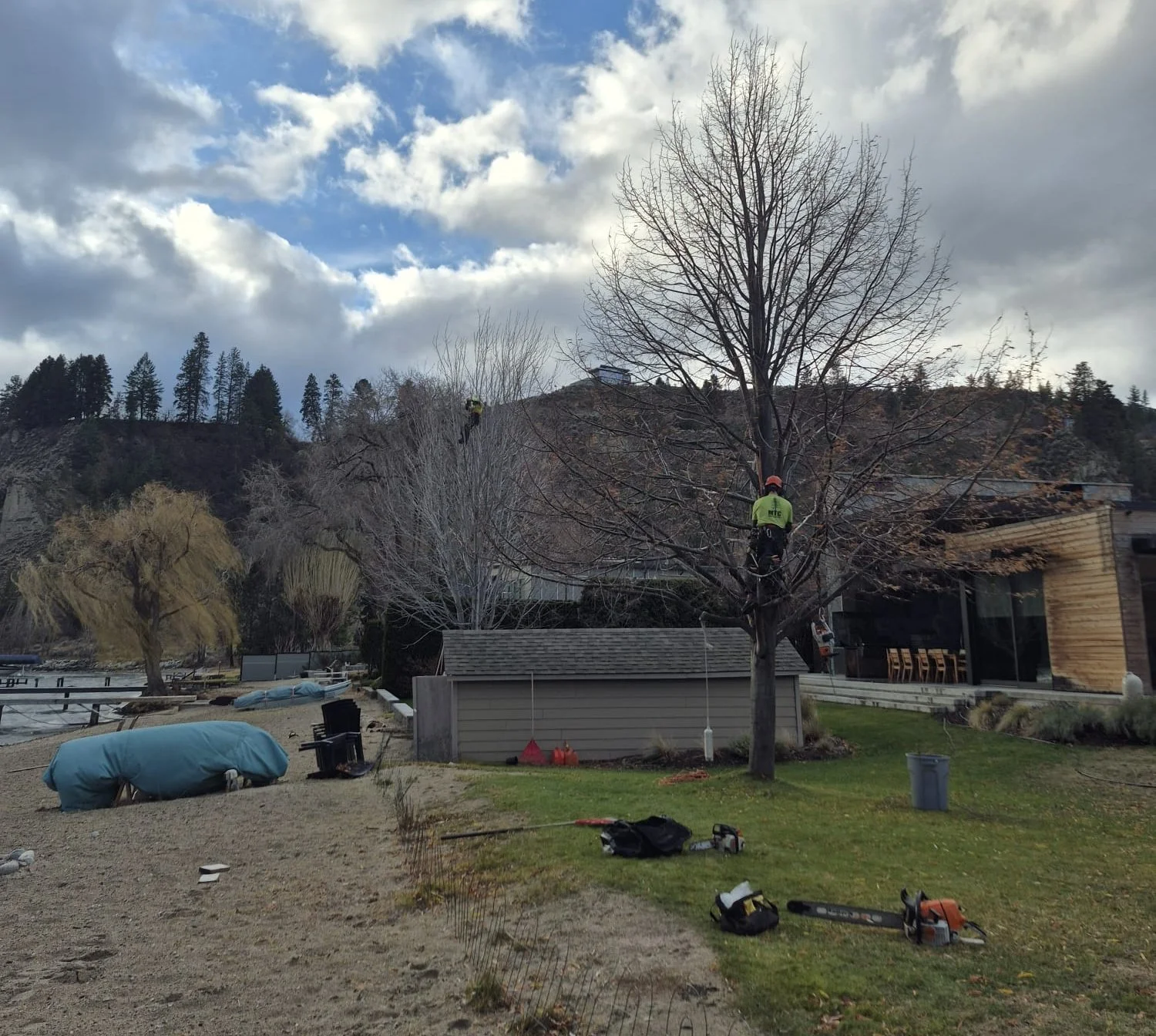
As temperatures cool and leaves begin to fall across the South Okanagan, many homeowners turn their attention to preparing their properties for winter. But when it comes to tree pruning, timing matters. Knowing which trees to prune, which to leave alone and when to call a professional arborist can make a significant difference in their long-term health and safety.
Fall is a season of transition throughout the South Okanagan. From Penticton and Summerland to Oliver, Osoyoos and surrounding communities, trees are preparing for colder temperatures, shorter days and the dormant winter months ahead.
For property owners, it's also an opportunity to assess the condition of their trees, identify potentially hazardous branches and consider whether professional pruning is needed before winter weather arrives.
However, one of the most common misconceptions about tree care is that all trees benefit from being pruned in the fall.
The reality is that the best time to prune depends on the tree species, its overall health and the reason for pruning. While certain work can be completed safely in autumn, other pruning is better postponed until late winter or early spring.
Understanding the difference can help homeowners protect their trees, avoid unnecessary damage and make informed decisions about seasonal maintenance.
Why Fall Is an Important Time to Assess Your Trees
As deciduous trees begin shedding their leaves, their underlying branch structure becomes increasingly visible. This makes it easier to identify problems that may have been hidden by dense summer foliage.
Branches that cross or rub against one another, deadwood, weak attachments and damaged limbs can become more apparent as the canopy thins.
Fall inspections are particularly valuable in the South Okanagan, where trees may have experienced months of intense summer heat, dry conditions and seasonal windstorms.
These environmental stresses can affect tree health and structural stability, sometimes without producing obvious symptoms until later in the year.
A fall assessment can help identify:
Dead or damaged branches: Limbs that may be more susceptible to breaking during winter storms.
Crossing or rubbing branches: Areas where repeated contact can damage bark and create potential entry points for decay organisms.
Weak branch attachments: Structural defects that may require professional assessment or corrective pruning.
Branches overhanging buildings: Limbs that could pose concerns for roofs, gutters, vehicles or other property features.
Signs of disease or decline: Unusual dieback, fungal growth, bark damage or changes in canopy condition.
Identifying these issues before winter provides an opportunity to determine whether immediate pruning is warranted or whether the work can be scheduled for a more suitable season.
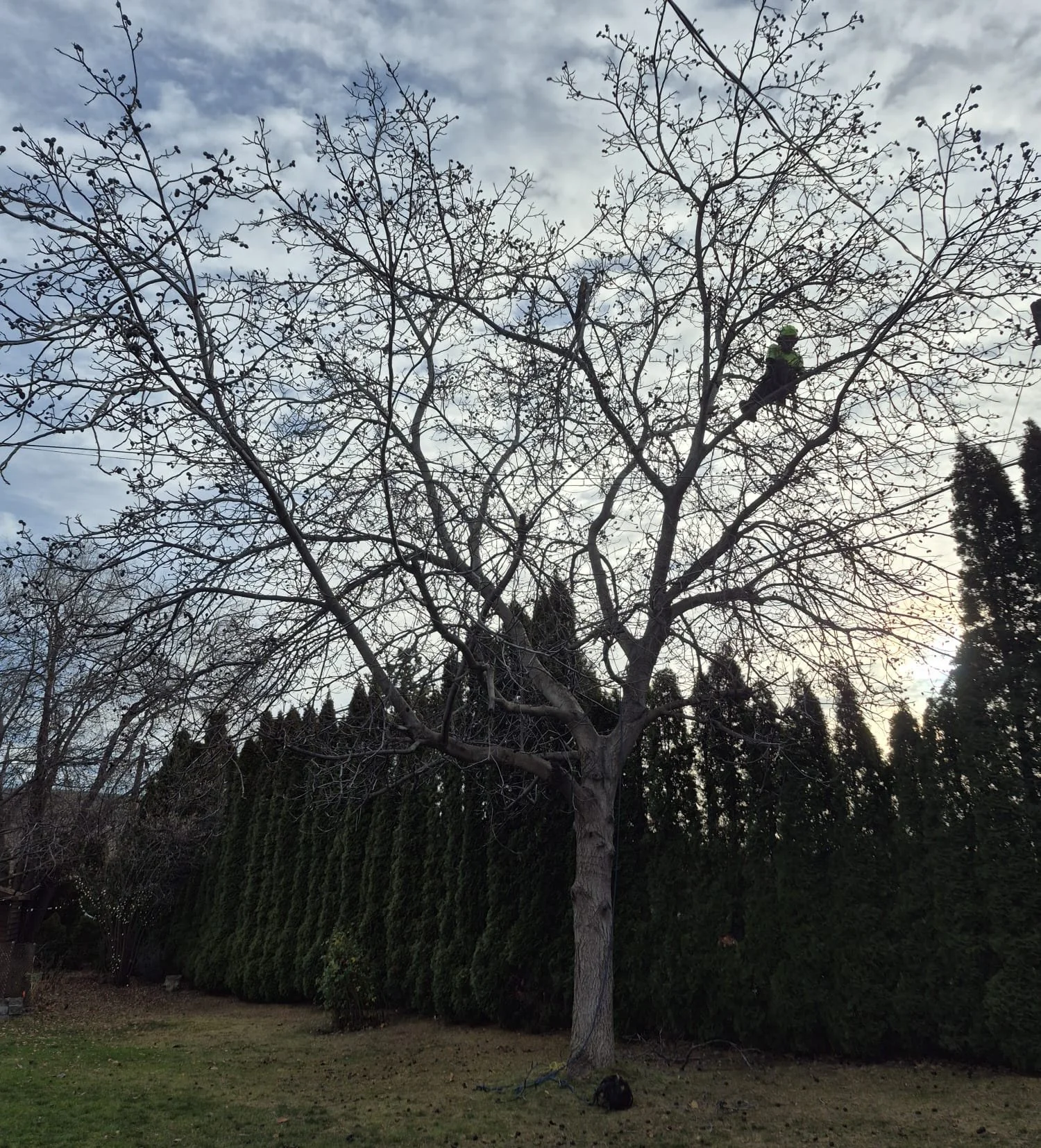
Leafless trees make it easier to evaluate branch structure and identify potential pruning needs.
Is Fall Actually a Good Time to Prune?
The answer depends on the species, the condition of the tree and the purpose of the pruning.
For many deciduous trees, late winter or early spring, while the tree is dormant and before new growth begins, is generally the preferred time for routine structural pruning.
During dormancy, the absence of foliage provides better visibility of the tree's structure, and pruning can often be completed with less disruption to active growth.
Early fall, on the other hand, is not always ideal for extensive pruning.
Trees are undergoing important physiological changes as they prepare for winter. Removing large amounts of healthy foliage during this period can reduce the tree's ability to accumulate energy reserves and may create unnecessary stress.
Pruning wounds also respond differently depending on the season, species and growing conditions.
This doesn't mean fall pruning should be avoided entirely. It means pruning should be purposeful, selective and appropriate for the individual tree.
Dead, broken or hazardous branches may need attention regardless of the season. Routine shaping or substantial canopy reduction, however, can often wait until the tree enters dormancy.
Which Trees Can Benefit from Fall Pruning?
Different trees have different pruning requirements, and South Okanagan properties often feature a combination of ornamental, shade, evergreen and fruit-bearing species.
Deciduous Shade Trees
Mature deciduous trees, including maples, ashes and other common landscape species, can benefit from structural assessments in the fall.
Once leaves have dropped, arborists can more easily evaluate branch spacing, weak unions and potential structural defects.
While dead or hazardous branches may be removed when necessary, extensive pruning of healthy limbs is often best scheduled during dormancy.
Fruit Trees
Fruit trees are common throughout the South Okanagan, but pruning requirements vary by species.
Apple and pear trees are frequently pruned during the dormant season to help maintain structure, manage growth and support future fruit production.
Stone fruit trees, including cherries, peaches, plums and apricots, may require different timing because pruning during cool, wet conditions can increase susceptibility to certain diseases.
For these trees, species-specific advice is especially important. Homeowners should avoid assuming that the same pruning schedule applies throughout their orchard or landscape.
Evergreen and Coniferous Trees
Pines, spruces, firs and other conifers generally require less routine pruning than many deciduous trees. Removing dead or damaged branches may be appropriate in fall, but extensive pruning should be approached cautiously.
Unlike many deciduous trees, certain conifers cannot readily regenerate growth from older, bare wood. Excessive cutting can therefore leave permanent gaps or affect the tree's natural appearance.
A professional assessment can help determine whether pruning is necessary and how much material can safely be removed.
Ornamental Trees
Flowering and ornamental trees may have very specific pruning windows. Some spring-flowering species develop their flower buds during the previous growing season. Pruning them in fall or winter can remove those buds and reduce the following spring's display.
Understanding how and when a particular tree flowers is an important part of developing an appropriate pruning plan.
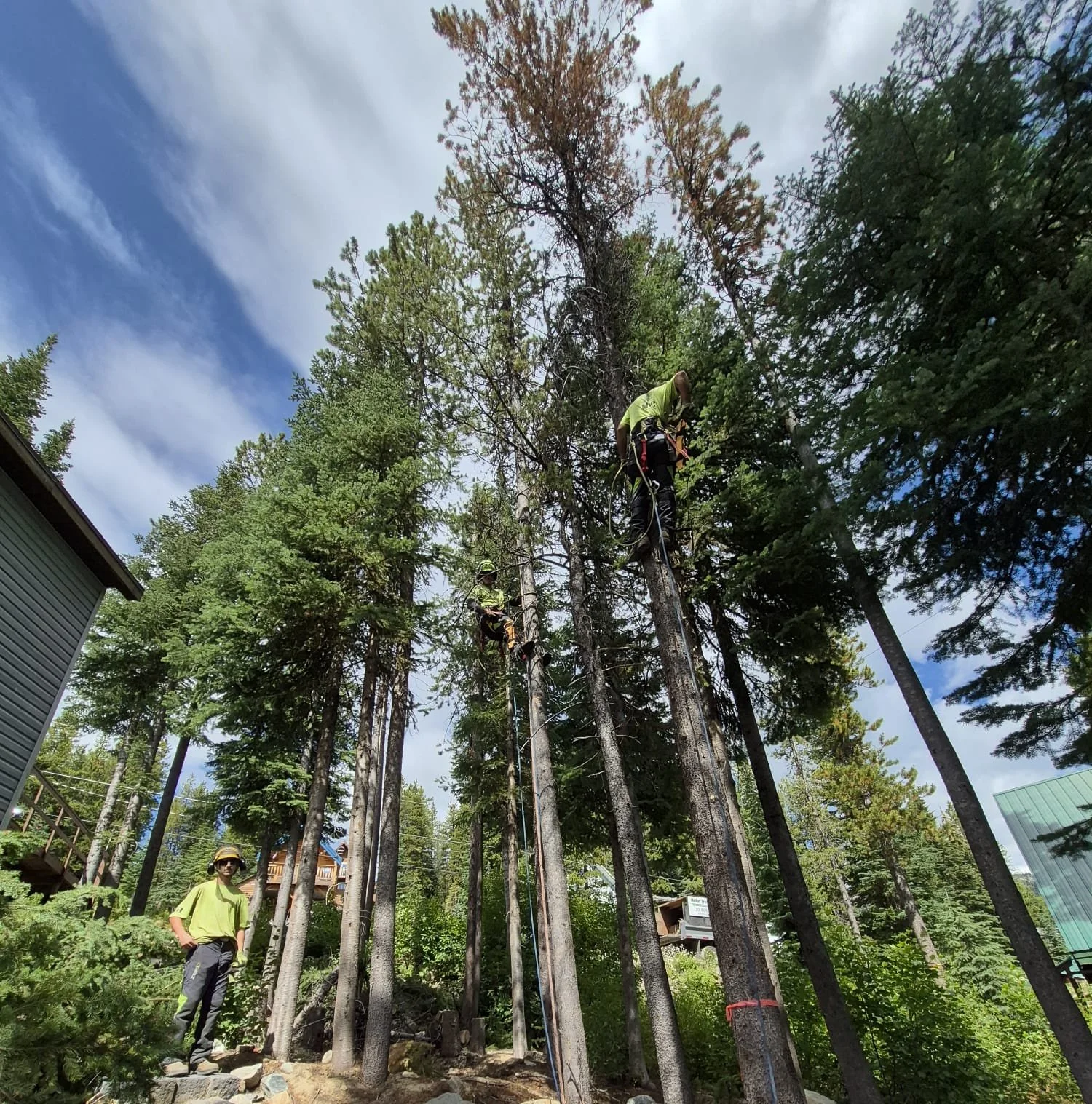
Different tree species require different approaches to pruning, maintenance and long-term care.
Five Common Fall Pruning Mistakes to Avoid
Even well-intentioned pruning can create long-term problems when the wrong techniques are used.
Here are five mistakes South Okanagan homeowners should avoid.
1. Removing Too Much of the Canopy
Excessive pruning can reduce a tree's energy-producing foliage, create unnecessary stress and encourage weakly attached replacement growth.
A healthy canopy plays an important role in supporting root development, regulating temperature and maintaining overall tree vitality.
Pruning should have a clearly defined purpose rather than simply removing branches to make a tree smaller.
2. Topping Mature Trees
Tree topping involves indiscriminately cutting major branches or stems to reduce height.
Although it may appear to provide a quick solution for an overgrown tree, topping can create large wounds, encourage structurally weak regrowth and increase future maintenance requirements.
Professional pruning focuses on maintaining appropriate structure while preserving as much of the tree's natural form as possible.
3. Pruning at the Wrong Time
Pruning schedules should account for tree species, seasonal conditions and disease susceptibility.
For example, pruning certain fruit trees during cool, wet weather may increase disease risks, while cutting spring-flowering ornamentals too early can remove next year's flower buds.
There is no single pruning calendar that works for every tree.
4. Making Improper Cuts
Poorly positioned cuts can damage important branch structures and interfere with a tree's natural ability to compartmentalize wounds.
Leaving excessively long stubs or cutting flush against the trunk can create problems that may take years to become apparent.
Proper pruning techniques are essential to maintaining healthy branch attachments and minimizing unnecessary damage.
5. Ignoring Safety Risks
Working around mature trees presents significant hazards, particularly when branches are large, elevated or close to buildings and utility lines.
Chainsaws, ladders, falling limbs and unpredictable branch movement can make even seemingly straightforward pruning dangerous.
Work involving large branches, climbing or proximity to electrical infrastructure should be left to appropriately trained professionals.
How Professional Pruning Helps Prepare Trees for Winter
Although South Okanagan winters are generally milder than those experienced in many other parts of Canada, the region can still experience strong winds, freezing temperatures and periods of heavy or wet snowfall.
These conditions can place additional stress on trees with existing structural weaknesses.
Professional pruning can help address certain risks before they become more serious.
For example, removing dead or damaged limbs may reduce the likelihood of branch failure. Selective structural pruning can also improve branch relationships and reduce excessive loading where appropriate.
However, pruning is not a guarantee against storm damage.
Some trees may have underlying defects, root problems or internal decay that cannot be resolved through branch removal alone.
In these situations, a more comprehensive tree health or structural assessment may be required.
The objective should always be to preserve healthy trees wherever practical while addressing legitimate safety concerns.
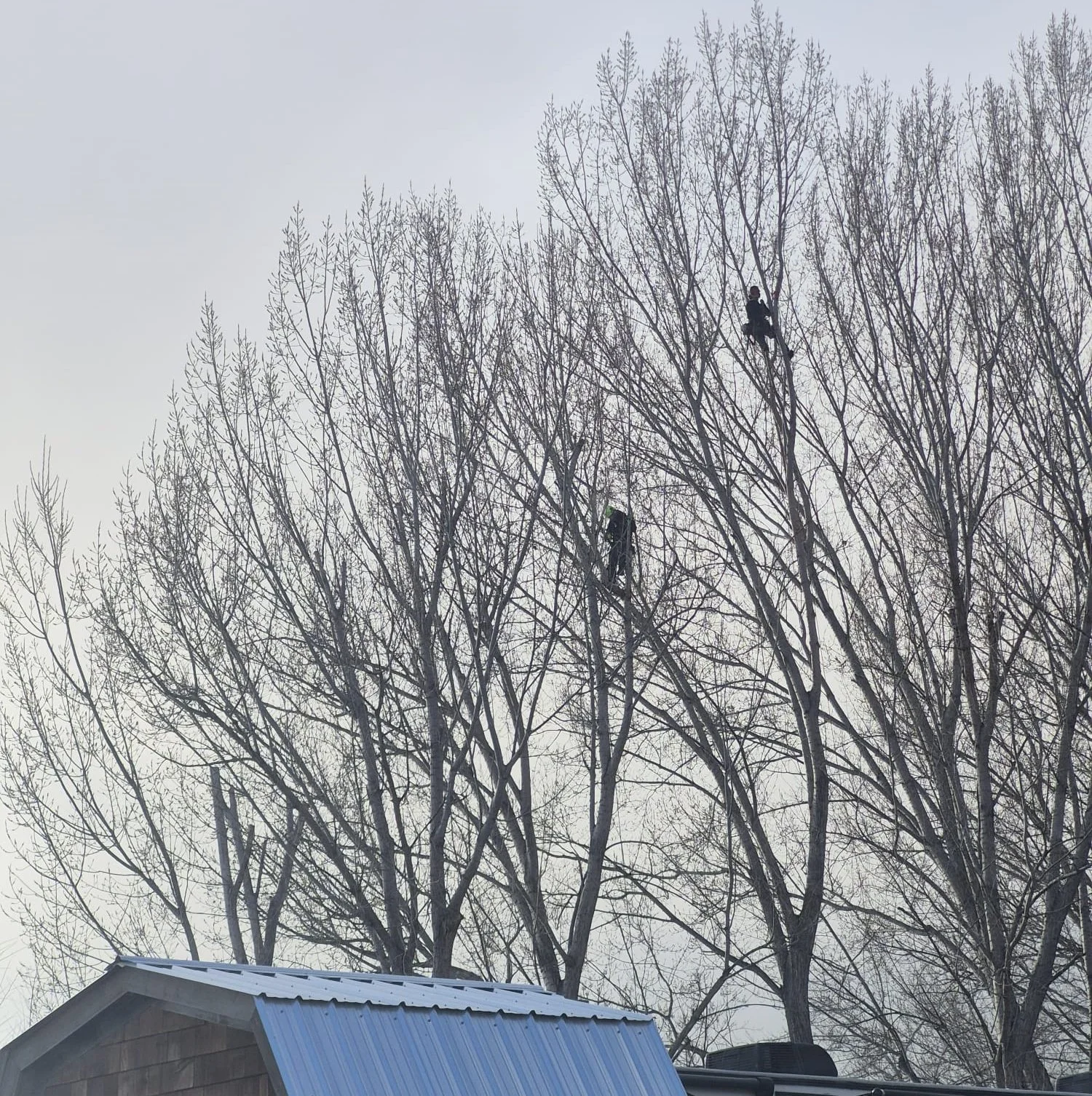
Millar Tree Care arborists working at height to assess and maintain mature deciduous trees.
Why Local Experience Matters in the South Okanagan
Tree care in the South Okanagan presents challenges that differ from those in wetter or cooler regions of British Columbia.
Long, hot summers, periods of drought, variable soil conditions and seasonal weather extremes can all influence tree growth and health.
Trees already stressed by insufficient moisture, root damage or disease may respond poorly to unnecessary pruning.
Likewise, mature trees growing near homes, driveways, retaining walls or other structures may require specialized equipment and careful planning.
Understanding these local conditions is essential when deciding how much pruning is appropriate and when the work should be completed.
At Millar Tree Care, our team brings more than 20 years of professional tree care experience to residential, commercial and municipal properties throughout the South Okanagan and surrounding communities.
Our approach emphasizes responsible tree management, professional standards and practical solutions tailored to each property's needs.
Whether the objective is removing hazardous deadwood, improving tree structure or developing a longer-term maintenance plan, we focus on protecting both the health of your trees and the safety of your property.
Should You Prune Now or Wait Until Winter?
For homeowners wondering whether to schedule pruning this fall, the best starting point is to consider why the work is needed.
Pruning may be appropriate now if:
A tree has dead, broken or visibly hazardous branches.
Limbs have been damaged by wind or other weather events.
Branches are creating an immediate safety concern.
A professional assessment identifies work that should not be delayed.
Waiting until dormancy may be preferable if:
The objective is routine structural pruning.
A healthy deciduous tree requires general canopy maintenance.
There is no immediate safety concern.
The species would benefit from pruning at a different time of year.
The important thing is not to rush into unnecessary pruning simply because autumn has arrived.
A professional arborist can evaluate the tree's condition and recommend the most appropriate timing and approach.
Plan Ahead with Millar Tree Care
Fall is an excellent opportunity to take a closer look at the trees on your property and prepare for the months ahead.
While some pruning work is best completed during winter dormancy, identifying concerns now can help homeowners avoid preventable problems and plan maintenance at the right time.
Whether you have mature shade trees, ornamental plantings, fruit trees or branches that may pose a safety concern, Millar Tree Care can help you determine the best course of action.
With over 20 years of experience serving the South Okanagan, our team provides professional tree pruning, tree health assessments, removals and a comprehensive range of arboricultural services.
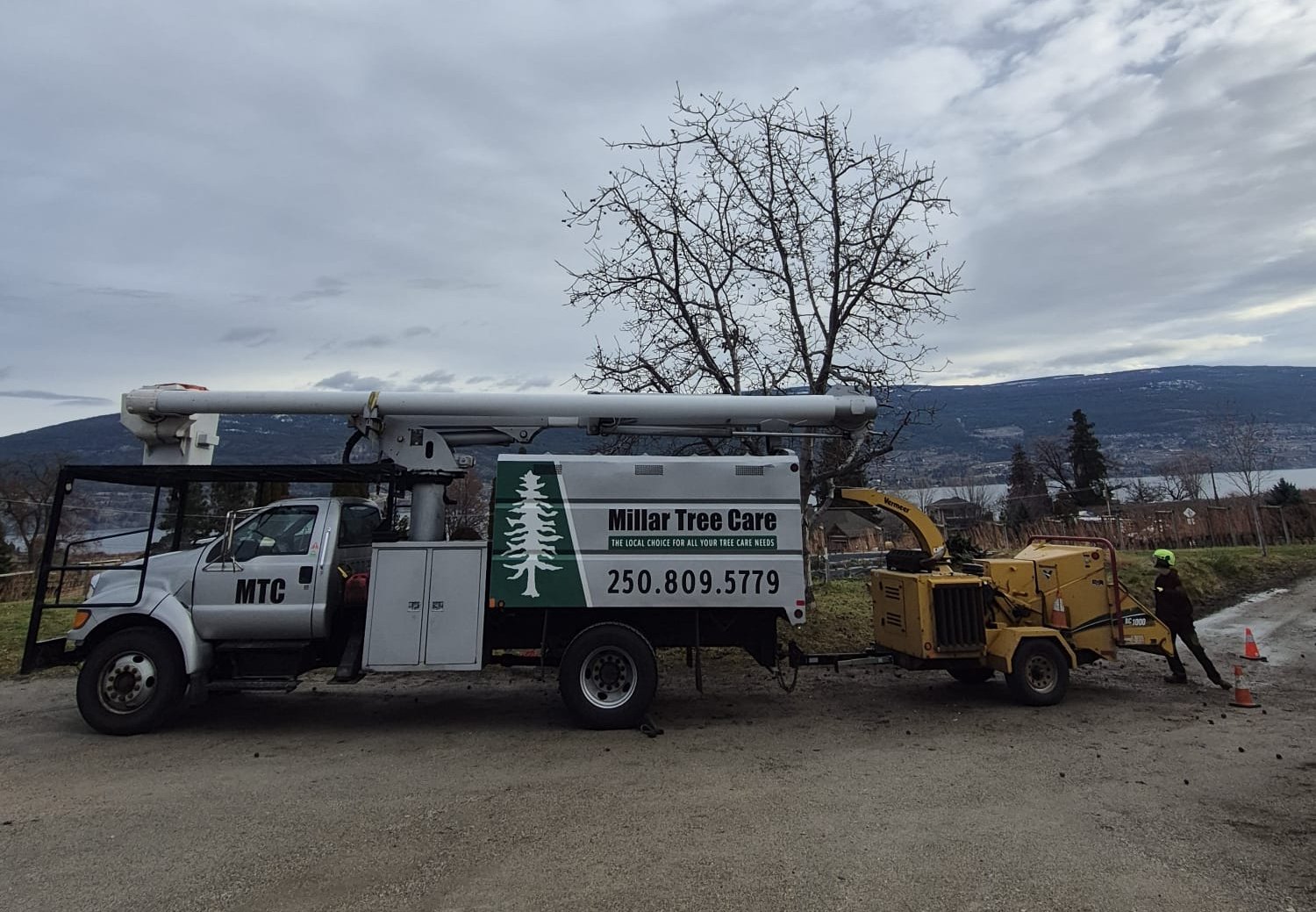
Have Questions About Fall Tree Pruning? It's Millar Time!
Not sure whether your trees need attention this fall or would benefit from pruning later in the dormant season? Contact Millar Tree Care for professional advice, seasonal maintenance recommendations and a complimentary estimate.
Call the MTC Hotline at (250) 809-5779 or visit https://www.millartreecare.com/contact to get started.
Proudly serving Penticton, Summerland, Naramata, Oliver, Osoyoos, Keremeos and surrounding South Okanagan communities.